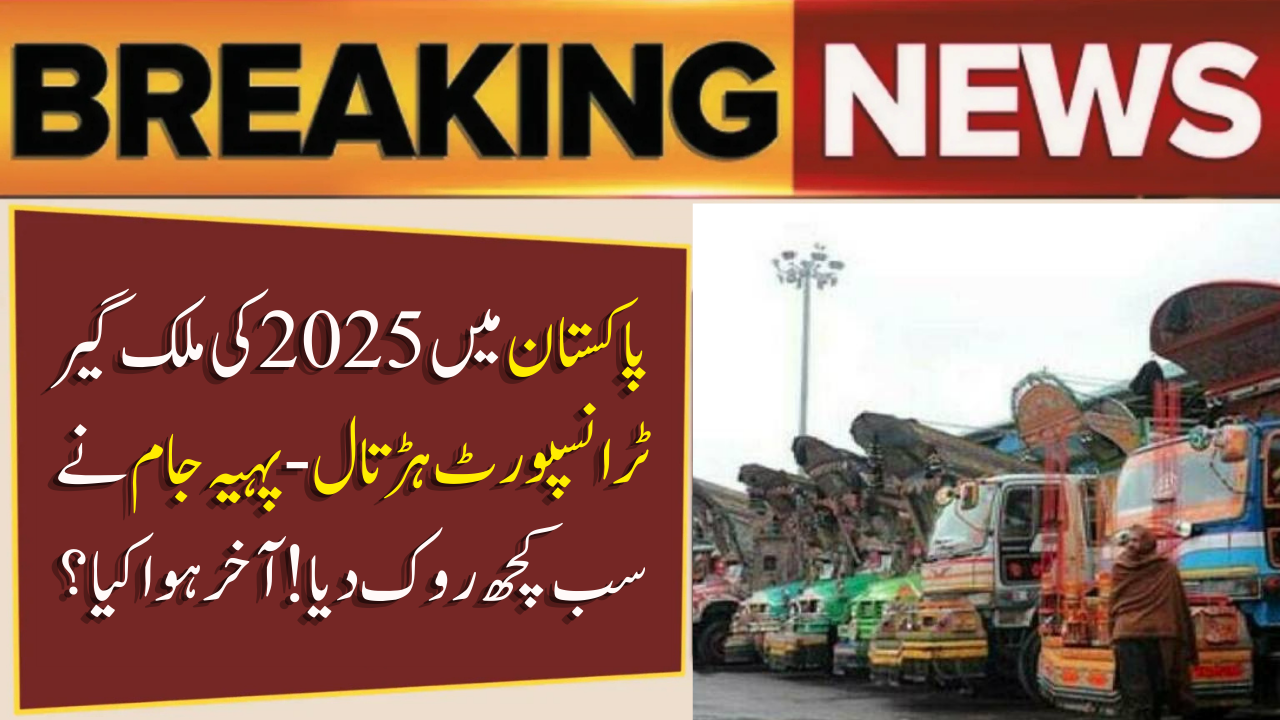
The Pakistan Transport Strike 2025 has triggered a nationwide debate as transporters across the country prepare for a large-scale wheel-jam shutdown in response to newly implemented traffic rules and increased fines. What began as a regional protest in Punjab has now evolved into a nationwide movement with significant implications for goods transport, public transport, and essential supply chains.
Why the Pakistan Transport Strike 2025 Started

The strike was sparked when the Punjab government enforced the Traffic Ordinance 2025, introducing a tougher penalty structure that transporters claim was implemented without any consultation.
APGTA President Nabeel Tariq highlighted that nearly 80% of transport operations have already slowed down due to the hefty fines imposed under the new rules.
Transporters Claim Lack of Consultation
Transport associations say that regulations directly affecting their livelihood should be discussed with drivers, owners, and unions — but this time, they were excluded entirely.
Heavy Fines Causing Financial Strain
Many drivers argue that even minor violations now result in fines that exceed their daily earnings. Small transporters are particularly vulnerable as operational costs continue rising.

Targeted Challans Raising Concerns
Both public and private transport groups claim that the enforcement teams are issuing what they describe as targeted challans, adding to already increasing pressure.
APGTA’s Wheel-Jam Strike Announcement
The All Pakistan Goods Transport Association announced that the wheel-jam protest will go ahead if the government fails to accept their 25-point list of demands.
Strike Timeline
- Punjab-wide strike on 8 December
- Nationwide wheel-jam protest starting 10 December
Transporters warn that the situation could escalate rapidly if the government does not intervene.
Risk to Essential Goods Supply
The suspension of transport operations may halt the movement of essential items, including food, fuel, medicines, construction materials, and industrial goods. Any prolonged shutdown could disrupt markets and daily life across the country.

Key Demands Behind the Pakistan Transport Strike 2025
Transport unions have raised multiple demands, largely focused on easing financial pressure and ensuring safety for long-distance drivers.
Revision of the New Traffic Ordinance
Transporters are calling for a complete review of:
- Heavy fines
- Overloading penalties
- Vehicle inspection rules
- Documentation charges
Allocation of Land for Truck Stands
They argue that Punjab urgently needs:
- New truck parking facilities
- Government-designated land
- Organized loading and unloading areas
The current shortage of legal truck stands creates congestion and operational delays.

Protection From Highway Robberies
Transporters say that highway robbery incidents are rising and demand:
- Better patrolling
- Security checkpoints
- Stronger law enforcement presence on long routes
End to Unfair Challans
Representatives claim challans are:
- Often miscalculated
- Sometimes repetitive
- Mostly targeted toward heavy vehicles
They want a transparent, technology-based challan system.
Impact of the Pakistan Transport Strike 2025 on the Economy
A nationwide wheel-jam protest could have far-reaching effects on Pakistan’s economy, supply chain, and public life.

Goods Supply Chain Disruption
Pakistan relies heavily on road transport for agricultural products, industrial raw materials, and retail goods. Even a short disruption may lead to:
- Shortages
- Price increases
- Shipment delays
Public Transport Shutdown
If buses, vans, and intercity vehicles join the strike, millions of commuters — including students, workers, and travelers — will face serious challenges.
Business and Industrial Losses
Industries that depend on daily goods movement may experience production delays or temporary shutdowns.
Government’s Response So Far
The Punjab government has defended the Traffic Ordinance 2025, stating that the stricter rules aim to improve road safety and reduce accidents. Officials believe the tough penalties will discourage violations like speeding, overloading, and unsafe driving.

However, transport unions argue that the ordinance should have been introduced gradually and only after thorough consultation.
Talks May Happen Soon
Government committees may soon meet transport representatives to avoid a severe nationwide crisis, but transport leaders remain firm: they want concrete action, not vague assurances.
Future of the Pakistan Transport Strike 2025
As the strike dates approach, uncertainty is rising. The outcome now depends on negotiations between the government and transport unions.
Possible Scenarios
- The government agrees to review fines → The strike may be postponed.
- Partial acceptance of demands → Protests may reduce in scale.
- No agreement → A complete nationwide shutdown could paralyze Pakistan’s transport system.
Conclusion
The Pakistan Transport Strike 2025 highlights the growing gap between transporters and the government regarding new traffic laws. With essential goods, public mobility, and economic stability on the line, both sides must reach a balanced agreement. As the protest days draw near, the nation hopes for a solution that prioritizes fairness, safety, and economic continuity.