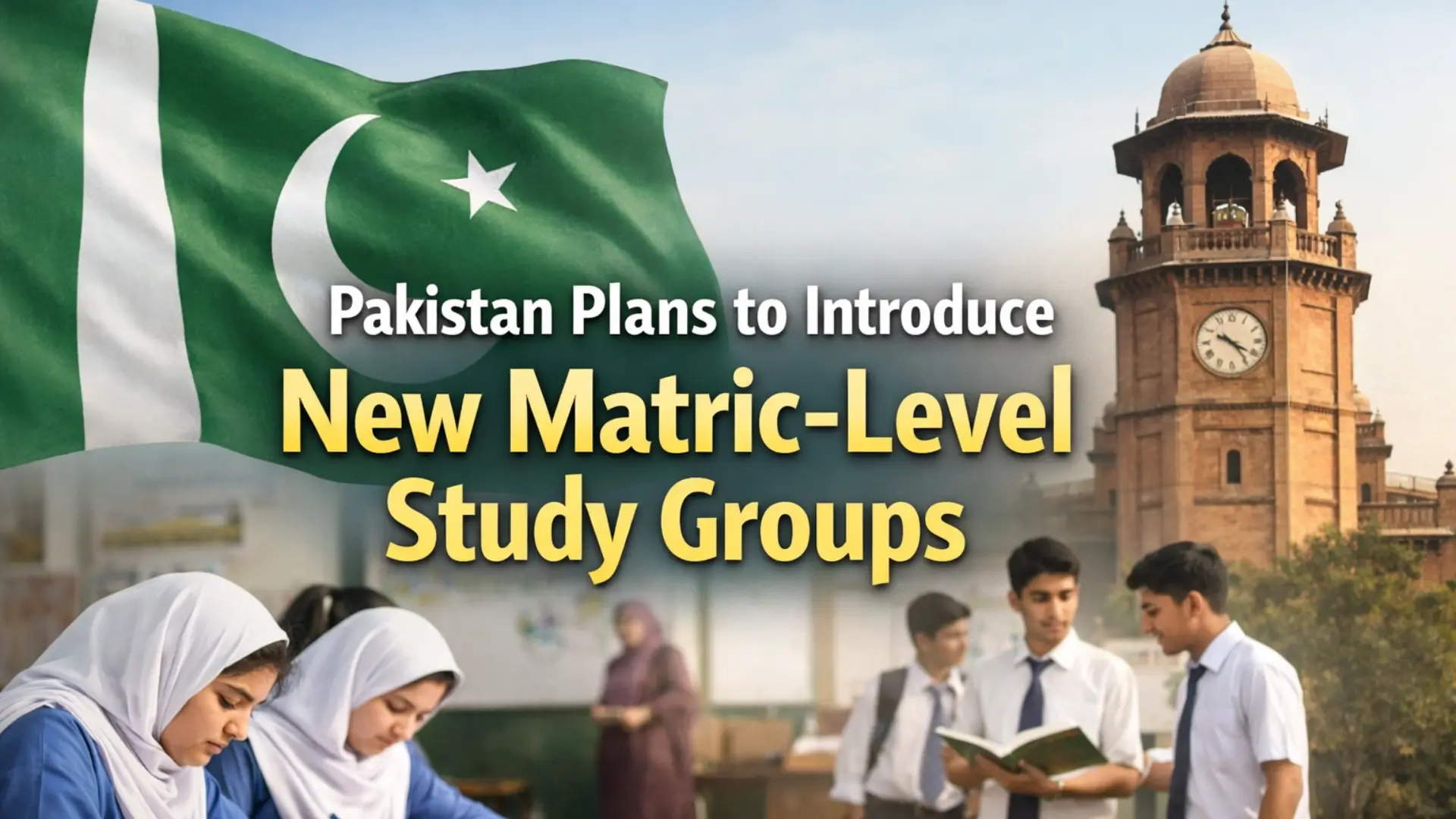
Pakistan Plans to Introduce New Matric-Level Study Groups. Education authorities in Pakistan have proposed a major reform at the matriculation level by introducing two new academic groups. The plan aims to add technical education and agriculture as formal study options for secondary school students across the country. Officials say the move will expand learning choices and better connect education with skills and employment needs.

The proposal will be discussed at a high-level consultative meeting called by the Inter Board Coordination Commission. The meeting is scheduled to take place in Islamabad on December 23. Representatives from education boards and relevant institutions will attend.
Why This Proposal Matters
For many years, matric students have had limited subject groups to choose from. Most students follow science, arts, or commerce streams. As a result, many learners struggle to find paths that match their skills or career goals.
By adding technical education and agriculture, authorities want to give students practical options at an early stage. These subjects can help students gain job-ready skills and support key sectors of the national economy.

What Will Be Discussed in the IBCC Meeting
Officials say the meeting agenda covers several important points. One key focus is the structure of the two new matric groups and how they will fit into the existing education system.
Participants will review subject combinations and explore alternative routes to higher education. They will also discuss eligibility rules for students who wish to move into pre-medical or pre-engineering groups at the intermediate level after completing matriculation in the new streams.
Impact on College Admissions
A major concern for students and parents is whether these new groups will limit future study options. Authorities plan to review admission policies to ensure fairness.

The meeting will examine whether students from technical education and agriculture backgrounds can apply for medical, engineering, or other professional programs. Clear criteria will be developed to guide colleges and boards.
Equivalence of Subjects and Foreign Certificates
Another key item on the agenda is subject equivalence. Officials will discuss how alternative matric subjects will be treated and whether they will hold equal value to existing groups.
The meeting will also decide on the equivalence of foreign educational certificates. This step is important for students returning from abroad or applying to Pakistani institutions with overseas qualifications.

Focus on Vocational and General Education
Beyond matric groups, the agenda includes wider discussions on vocational training and general education reforms. Authorities want to align school education with market needs and modern learning standards.
A proposal to create a national working group on education reforms will also be reviewed. This group would help coordinate policy changes and long-term planning across provinces.
What Happens Next
If the proposal gains approval, education boards will begin drafting detailed guidelines. These will cover curriculum design, examinations, and teacher training. Any final decision will likely be announced after the December 23 meeting.
FAQs
What new subjects are being proposed at matric level?
Technical education and agriculture are proposed as two new matric groups.
Who is discussing this proposal?
The Inter Board Coordination Commission is leading the discussions.
When will the meeting take place?
The consultative meeting is scheduled for December 23 in Islamabad.
Will students from these groups enter medical or engineering colleges?
Authorities are reviewing eligibility rules to decide this.
Why is this reform important?
It gives students more practical options and supports skill-based education.
Conclusion
The proposal to add technical education and agriculture at the matric level marks an important step in education reform. It reflects a shift toward practical learning and wider career choices for students. The upcoming IBCC meeting will play a key role in shaping how these changes move forward and how students benefit in the future.