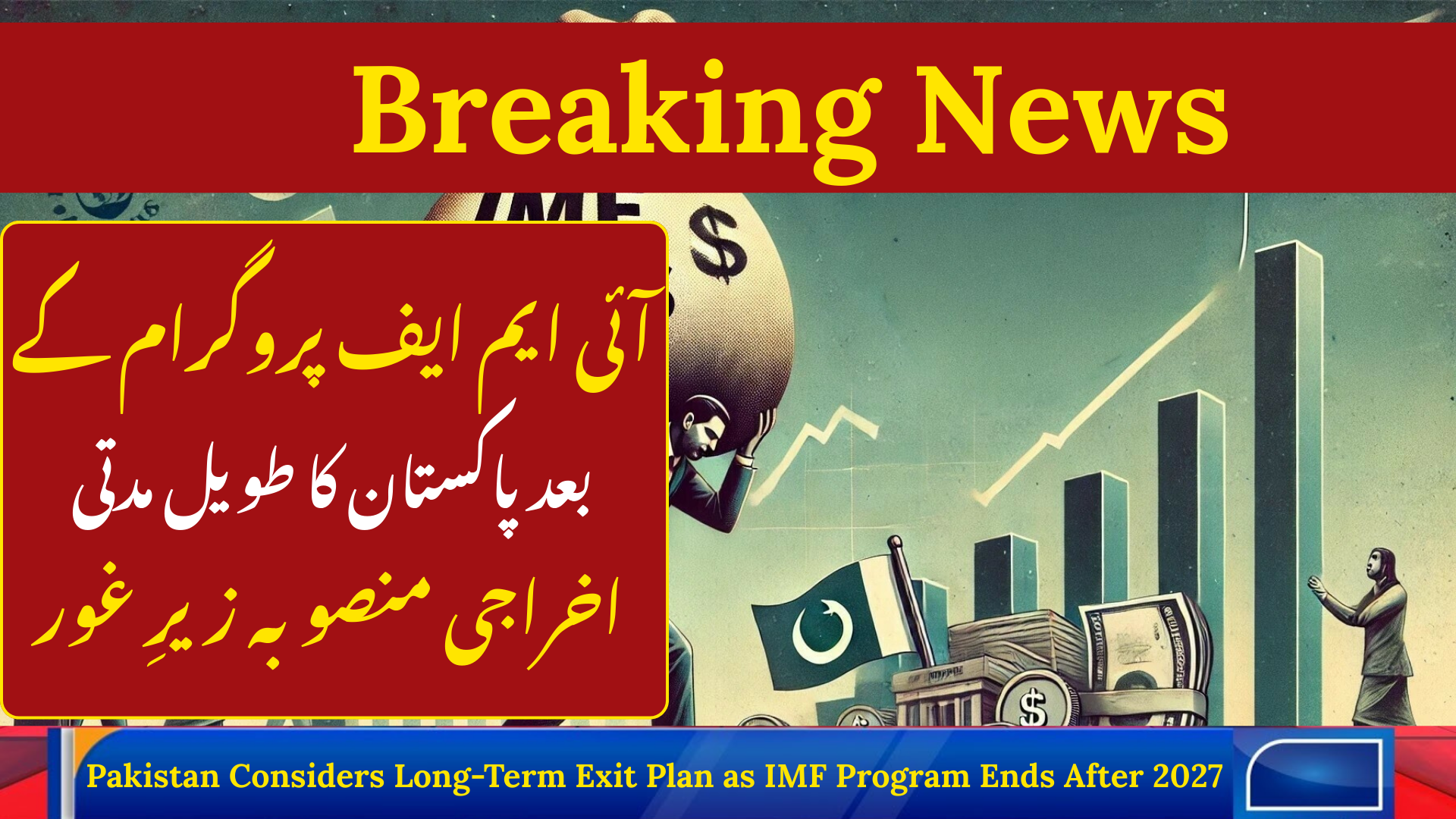
Pakistan Considers Long-Term Exit Plan as IMF Program Ends After 2027. Pakistan is exploring whether it can permanently end its reliance on the International Monetary Fund once the current $7 billion bailout program expires in 2027. Policymakers warn that without deep and timely reforms, the country risks slipping back into another IMF arrangement.
Government Starts Post-IMF Strategy Talks

The federal government has begun internal discussions to shape a credible post-IMF economic strategy. The focus is on strengthening foreign-exchange reserves, expanding exports, and reducing external vulnerabilities. A recent high-level meeting reviewed whether Pakistan can manage its economy without IMF support after September 2027.
Planning Commission Warns of Reform Risks
An internal assessment by the Planning Commission of Pakistan cautions that without urgent structural reforms, Pakistan may be forced to return to the IMF. The report highlights weak foreign-exchange reserves and underdeveloped export value chains as key risks that could trigger renewed dependence on external lenders.

Export Target Seen as Critical
Planning Minister Ahsan Iqbal said Pakistan must raise exports to $63 billion by 2029 if it wants the current IMF program to be its last. He warned that failure to meet this target would create a serious external sector gap, making another IMF deal likely.
External Financing Pressures Ahead
Officials involved in the assessment said that as Pakistan moves from economic stabilization to growth, the current-account deficit could temporarily rise to just under 2 percent of GDP. This would translate to more than $10 billion annually and create additional financing needs of about $4 billion in 2027–28, $5.5 billion in 2028–29, and $3 billion in 2029–30.
How Pakistan Could Fill the Funding Gap
According to the Planning Commission, Pakistan could meet more than $12 billion in external financing needs between 2028 and 2030 without IMF support, but only if reforms are implemented quickly. The plan relies on increasing exports by $4 billion, attracting an extra $4 billion in remittances, securing around $3 billion in new foreign direct investment, and reducing agricultural imports through local substitution.
Avoiding Another IMF Program
The assessment concludes that Pakistan can still avoid what would effectively be its 27th IMF program by building strong fiscal and external buffers. However, officials admit the country remains vulnerable due to low reserves and heavy external repayment pressures.

Institutions Question Current Growth Model
The debate on long-term economic stability has intensified following public statements from the State Bank of Pakistan and the Special Investment Facilitation Council. Both institutions have questioned the effectiveness of the existing growth model and pointed to continued heavy reliance on the IMF and other official creditors.
Uraan Pakistan Reform Roadmap
In response, the Planning Commission has proposed a three-stage reform roadmap under its “Uraan Pakistan” 10-year framework.

- Phase One (up to 2027): Focuses on fiscal reforms, energy sector improvements, governance, human resource development, and export alignment.
- Phase Two (2029–2032): Emphasizes investment-led growth through industrialization, export expansion, technology adoption, and agricultural modernization.
- Phase Three: Targets a transition to a productivity-driven, technology-based economy.
Targets and Criticism
Officials say the framework could help keep inflation low, maintain growth above 6 percent, and raise exports enough to build durable external buffers. Critics, however, argue that the plan lacks clear operational detail and a concrete strategy to achieve its ambitious goals, including turning Pakistan into a $1 trillion economy by 2035.
Prime Minister Orders Results-Based Plan
According to the report, Shehbaz Sharif has instructed the Planning Commission to convert the framework into a results-based strategy with measurable outcomes. The explicit aim is to permanently end Pakistan’s dependence on IMF programs.

Conclusion
Pakistan’s bid to break free from repeated IMF bailouts after 2027 depends on swift reforms, sustained export growth, and stronger external buffers. Officials warn that without decisive action, the country could once again be forced to seek IMF support despite its long-term ambitions.