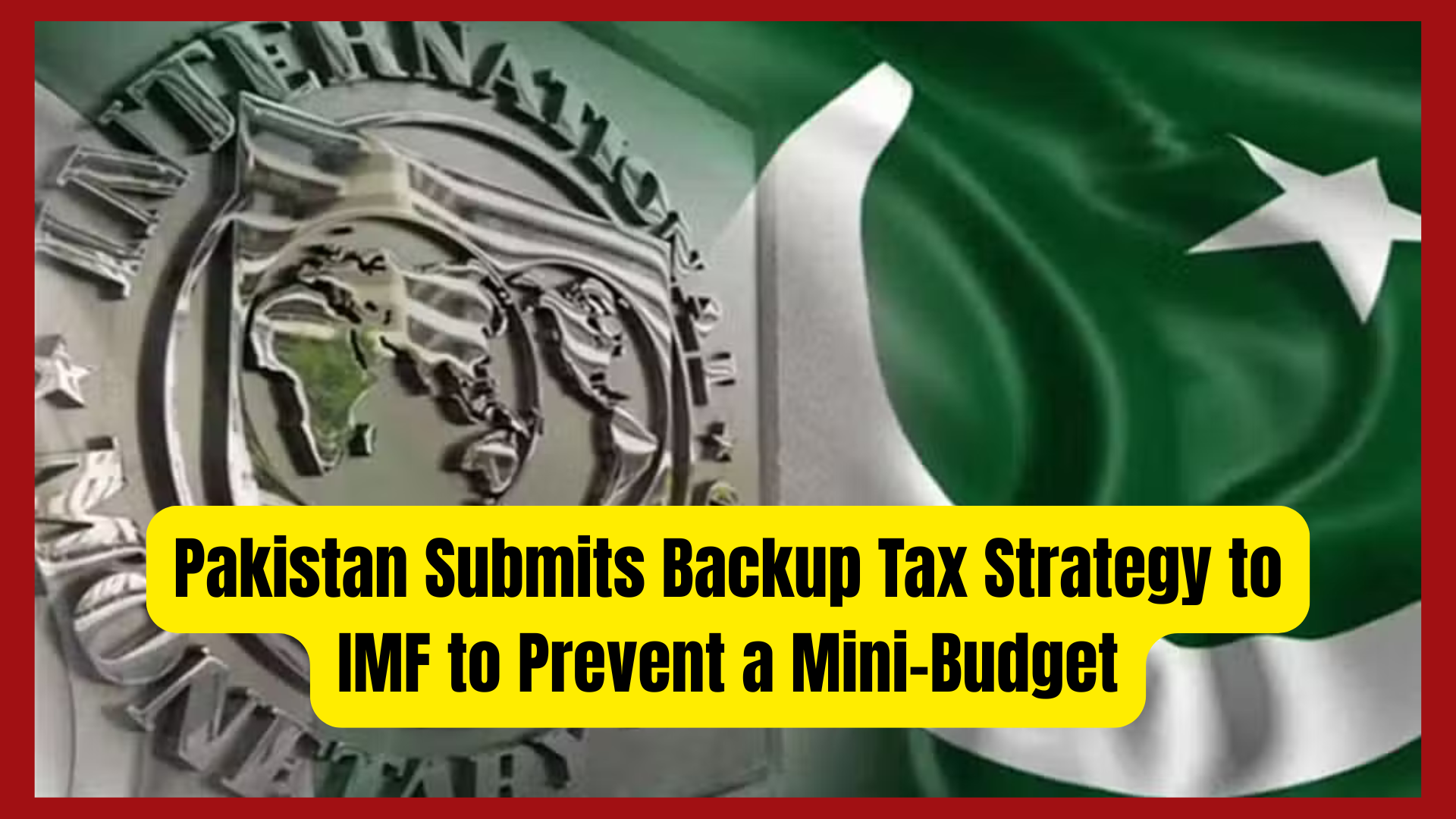
Pakistan Submits Backup Tax Strategy to IMF to Prevent a Mini-Budget. Pakistan has shared a contingency fiscal plan with the International Monetary Fund to avoid a mid-year mini-budget as early revenue shortfalls begin to appear. IMF documents show that the Federal Board of Revenue may miss its annual target, forcing the government to prepare corrective measures ahead of the December 2025 revenue review.
Why Pakistan Submitted the Fiscal Plan

The IMF report highlights concerns over slower-than-expected tax collection. To prevent a funding gap later in the year, the government told the IMF that it is ready to act early if revenue continues to fall below projections. This proactive approach aims to maintain fiscal discipline, avoid emergency taxation, keep the IMF program on track, and meet quarterly performance criteria.
Proposed Revenue Measures to Address Shortfalls
To generate additional revenue, Pakistan has proposed several measures under the contingency plan.
Higher Excise Duty on Fertilizers and Pesticides
The government plans to increase excise duty by 5 percent on fertilizers and pesticides, targeting sectors that historically had lower taxation.
New Taxes on High-Value Sugar Products
Pakistan intends to expand its tax base by introducing fresh taxes on premium and processed sugar products.

18% Sales Tax Under Consideration
Officials are evaluating an 18 percent sales tax on selected items currently taxed at zero or reduced rates. This move may help boost revenue collection in the second half of FY26.
Plan to Reduce Government Expenditures
If revenue pressure intensifies, the government is prepared to cut non-essential public spending. These reductions form part of a broader strategy to prevent fiscal slippage and support IMF stabilization conditions.
IMF’s Response to Pakistan’s Contingency Plan
The IMF welcomed Pakistan’s willingness to act early. The Fund noted that timely corrective steps are essential for maintaining macroeconomic stability, achieving revenue goals, and avoiding mid-year fiscal disruptions. These measures also help Pakistan stay aligned with quarterly performance benchmarks under the Extended Fund Facility.
Long-Term Goal: Raising the Tax-to-GDP Ratio
The government reaffirmed its commitment to increasing the tax-to-GDP ratio to 15 percent. This long-term target fits within broader structural reforms aimed at strengthening public finances, improving governance, and supporting economic growth.
Conclusion
Pakistan’s contingency plan reflects a shift toward early and preventive fiscal management. By preparing new taxes and tightening expenditures ahead of time, the government aims to avoid a disruptive mini-budget and ensure stability under the IMF program. The effectiveness of these measures will depend on revenue trends in the coming months, but the plan signals a clear intention to meet IMF conditions and support long-term fiscal sustainability.